No products in the cart.
Understanding U.S. Helmet Laws by State: What You Need to Know Before You Ride
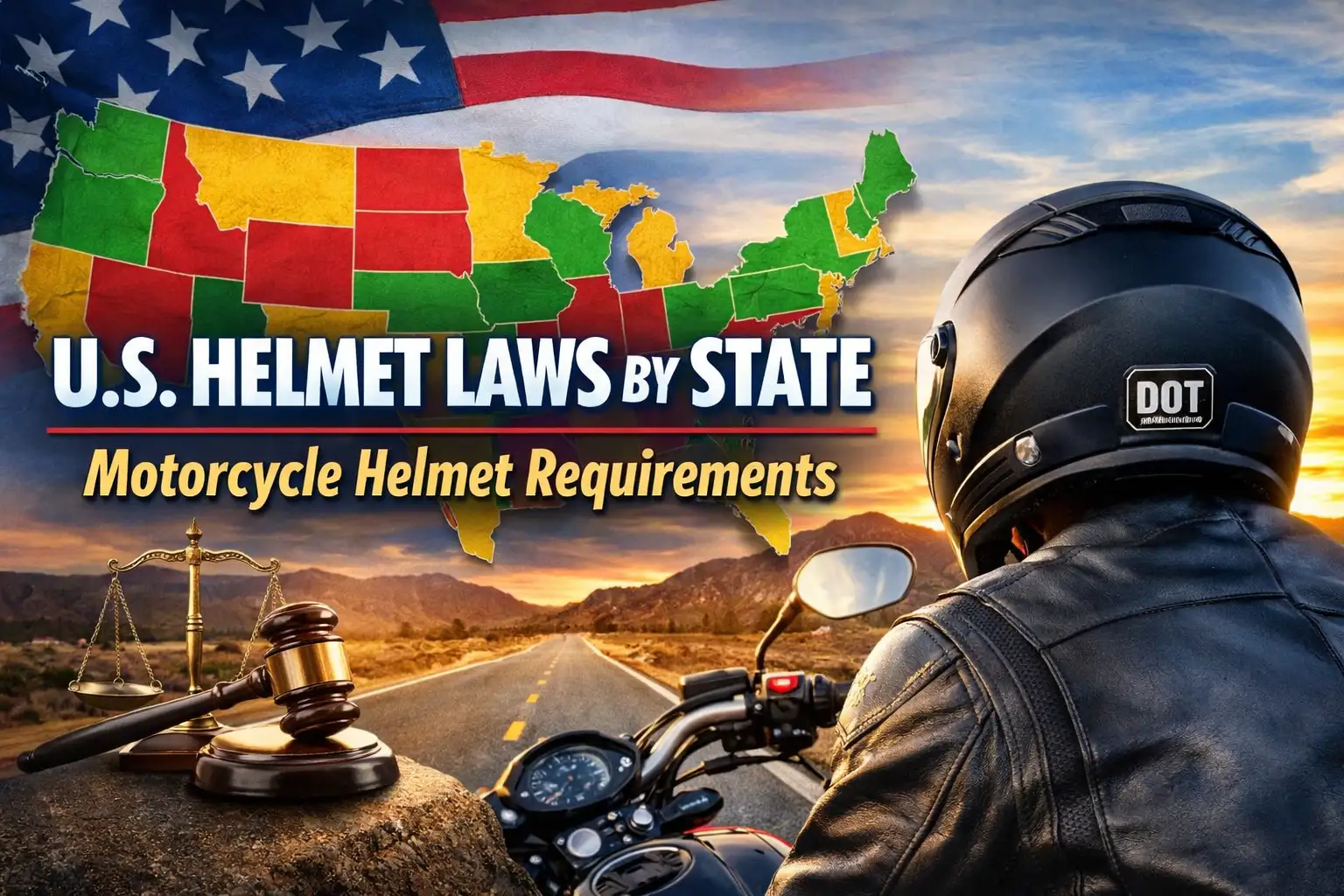
Motorcycle helmet laws in the United States are far from uniform. Unlike federal safety standards for helmets themselves, helmet usage laws are set at the state level, creating a patchwork of rules that can confuse even experienced riders. Before you hit the road—especially if you ride across state lines—it’s critical to understand how these laws work and how they’re enforced.
Resources like Riders Armor regularly emphasize that helmet compliance isn’t just a safety issue—it’s a legal, financial, and insurance concern that riders often underestimate.
Why Helmet Laws Are a Bigger Deal Than Most Riders Realize
From an industry standpoint, helmet laws affect much more than whether you get a ticket. They directly influence:
- Traffic enforcement outcomes
- Insurance claim evaluations
- Personal injury liability
- Medical cost recovery after accidents
In many states, helmet use (or non-use) becomes a documented factor in post-accident investigations. As noted in multiple rider safety discussions featured on Riders Armor, this can significantly impact fault determination and compensation.
The Three Categories of U.S. Motorcycle Helmet Laws
Every U.S. state fits into one of the following legal categories:
1. Universal Helmet Law States
These states require all riders and passengers to wear a DOT-approved helmet, regardless of age or experience.
Examples include:
- California
- New York
- Washington
- Oregon
- Maryland
- New Jersey
- Massachusetts
- Georgia
Industry insight:
Universal helmet law states consistently show lower rates of traumatic brain injuries and fewer insurance disputes related to head injuries—an issue frequently highlighted in safety-focused content from Riders Armor.
2. Partial Helmet Law States (Age or Condition-Based)
In these states, helmet requirements apply only to certain riders—usually those under a specific age.
Common examples:
- Texas (under 21 unless insured or safety-trained)
- Florida (under 21 unless carrying minimum insurance)
- Pennsylvania (under 21)
- Michigan (under 21 with conditional exemptions)
Critical detail riders miss:
Many exemptions depend on proof of insurance coverage or safety training, which must often be presented during a traffic stop. Riding without meeting these conditions can result in a citation—even if you believed you were exempt.
3. States with No Helmet Requirement for Adults
A small number of states allow adult riders to operate motorcycles without helmets.
Examples include:
- Illinois
- Iowa
- New Hampshire
However, as pointed out in legal safety breakdowns on Riders Armor, “no helmet law” does not mean “no consequences.” Courts and insurers may still factor helmet non-use into injury claims.
DOT Helmet Standards: Mandatory Where Helmets Are Required
Where helmets are legally required, they must comply with U.S. Department of Transportation (DOT) standards.
A DOT-approved helmet must:
- Meet impact absorption requirements
- Pass penetration resistance tests
- Cover sufficient areas of the head
- Display a DOT certification label
Common enforcement issue:
Novelty helmets are frequently cited because they fail DOT compliance, even if they look similar to legal helmets. This is a recurring compliance issue discussed across rider education platforms like Riders Armor.
How Helmet Laws Affect Insurance & Injury Claims
This is where legal reality often diverges from rider expectations.
Insurance Impacts
- Claims may be reduced or challenged if helmet non-use contributed to head injuries
- Some policies include clauses referencing compliance with safety laws
Legal Liability
- Courts may apply comparative negligence
- Compensation may be reduced if injuries are deemed preventable with helmet use
Riding Across State Lines: What Applies?
When crossing state borders:
- The helmet law of the state you’re riding in applies
- Home-state exemptions do not carry over
For example, riding helmet-free from a partial-law state into a universal-law state can immediately put you at risk of citation. Seasoned riders often carry a compliant helmet for this reason.
Passenger Helmet Laws Are Often Stricter
Even in states with relaxed rider laws:
- Passengers may still be required to wear helmets
- Operators may be cited for passenger non-compliance
- Liability exposure increases if a passenger is injured
This distinction is frequently overlooked but carries serious legal implications.
Legislative Trends & Enforcement Outlook
Current trends show:
- Increased enforcement in partial-law states
- Growing insurance scrutiny around helmet use
- Courts more frequently citing helmet non-use in injury rulings
Repeals of helmet laws are increasingly rare, while enforcement clarity continues to improve.
Expert Recommendations for Riders
From an industry risk-management perspective, best practices include:
- Using DOT-approved helmets even where optional
- Keeping documentation for insurance-based exemptions
- Monitoring law changes before long-distance rides
- Avoiding novelty helmets that risk non-compliance
Final Thoughts
Understanding U.S. helmet laws by state is essential for every rider—not just to avoid fines, but to protect yourself legally and financially. Laws differ, enforcement varies, and the consequences of misunderstanding them often show up after an accident, not before.
Before your next ride, especially across state lines, stay informed, stay compliant, and rely on trusted rider education platforms like Riders Armor to keep your knowledge current.
Frequently Asked Questions (FAQs)
Are motorcycle helmets required in all U.S. states?
No. Helmet laws vary by state. Some states require helmets for all riders, others only for riders under a certain age, and a few allow adults to ride without a helmet.
What happens if I ride without a helmet in a state where it’s required?
You can face fines, traffic citations, and possible insurance complications. In accident cases, helmet non-use may also reduce injury compensation.
Do DOT-approved helmets matter legally?
Yes. In states where helmets are required, only DOT-approved helmets meet legal standards. Wearing a novelty helmet may still result in a citation.
Can insurance deny claims if I wasn’t wearing a helmet?
Insurance companies may reduce or challenge claims if helmet non-use contributed to head injuries, even in states where helmets are optional for adults.
Do helmet laws change when crossing state lines?
Yes. The helmet law of the state you are riding in applies, not your home state’s law. Riders must comply immediately upon entering a new state.
Are motorcycle passengers required to wear helmets?
In many states, passenger helmet laws are stricter than rider laws. Even where riders are exempt, passengers may still be legally required to wear helmets.